
APPLICATIONS
Optimise your boiler rooms with online water monitoring
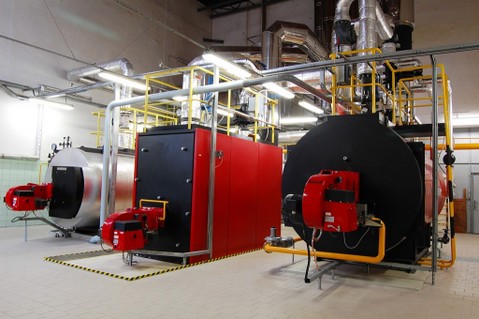
Heat-generating systems, whether hot-water or steam boilers, are highly sensitive to the quality of the water used. Scale build-up – caused by water hardness – is one of the main factors contributing to energy inefficiency, unplanned maintenance and high operating costs.
The implementation of a continuous water quality monitoring system makes it possible to turn this vulnerability into a source of savings. With online analysers such as the Testomat® EVO TH or the Testomat 808®, it is possible to monitor water hardness in real time, take automatic action if thresholds are exceeded, and optimise the overall operation of your system.
As the water temperature rises, mineral salts precipitate, forming limescale deposits on heat exchange surfaces. Even thin layers of limescale have a negative impact on efficiency:
- 0.04 inches (1 mm) of limescale = up to 30 % loss heat transfer
- +12 % energy consumption
- Risks of overheating, cracking and corrosion
The economic impact of limescale
A practical example involving a steam boiler 15 tonnes per hour, operating 6,000 hours per year :
- Make-up water: 49,500 m³/year
- Hardness: 0.1°dH → 0.11 mm scale build-up
- Annual additional energy costs: €20,300
- At 1.0 dH → 1.08 mm of scale → up to €105,700 per year
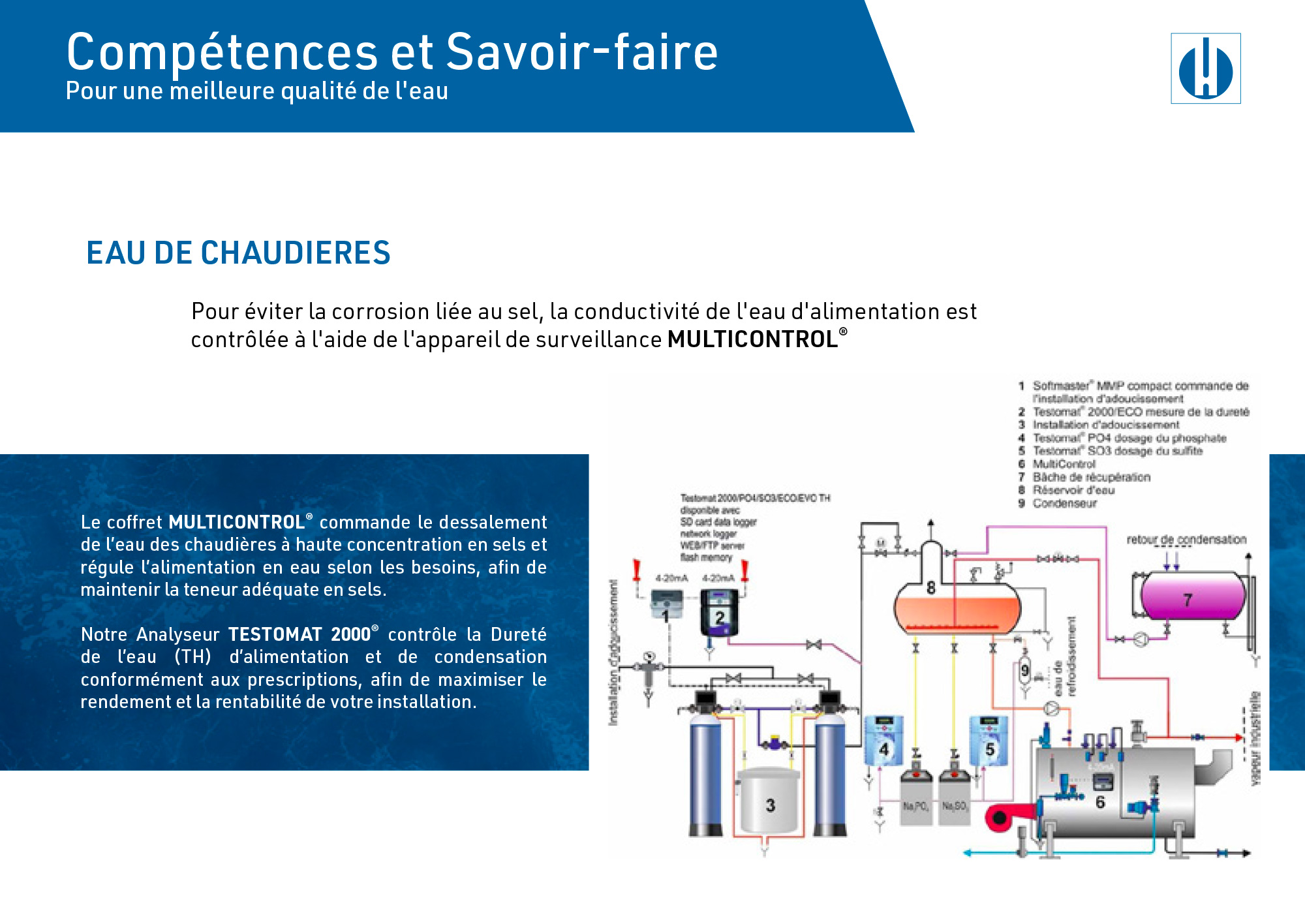
Without precise control of water hardness, boilers require frequent cleaning, often at short notice:
| Frequency of cleaning | Days off per year | Estimated cost |
|---|---|---|
| Unsupervised | 2 to 3 times a year | €10,000 to €70,000 |
| With Testomat | Once a year | €5,300 |
The solutions: Testomat® EVO TH & Testomat 808®
Testomat® EVO TH- For medium- to high-capacity boilers
- Automated monitoring of water hardness
- Complies with the TÜV WÜ 100 standard
- Alarms and 4–20 mA outputs for system integration
Testomat 808®
- Ideal for small steam boilers
- Complies with standard DIN EN 12952-7
- Low investment, quick return
Other critical parameters
In addition to hardness, other factors have a significant impact on performance:
- Conductivity: too high = limescale, corrosion, limescale build-up
- Silicates, sulphates, phosphates: additional risks associated with energy-intensive facilities
- Regeneration of the water softener system: can be optimised using alerts from the analysers
Benefits of online monitoring
- Fewer cleaning cycles
- Less water and salt loss
- Reduction in energy consumption
- Prevention of breakdowns and damage to property
- Return on investment in less than a year
Smart water monitoring in cooling towers
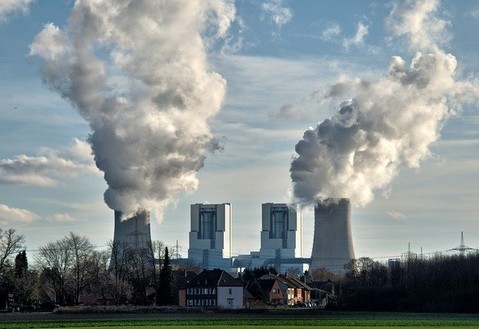
In industrial cooling systems, water management is a key factor in performance. Cooling towers, in particular, are exposed to a range of risks: salt build-up, scale formation, corrosion of metal components, and, above all, biological contamination, particularly from Legionella.
To avoid these costly and dangerous issues, automated online water quality monitoring is now essential. The solutions developed by Heyl enable you to monitor every critical parameter – in full compliance with current standards, such as VDI 2047-2.
With every operating cycle, water evaporates. This natural phenomenon leads to a concentration of mineral salts (calcium, magnesium, chlorides, etc.) and an increase in conductivity. Without proper flushing, the consequences are immediate:
- Deposits on heat exchangers
- Reduction in thermal efficiency (up to -30 %)
- Equipment overheating
- Unexpected breakdowns and additional maintenance costs
At the same time, the health risk must never be underestimated: a biofilm or stagnant water can encourage the proliferation of Legionella pneumophila, with serious health implications and strict legal obligations for operators.
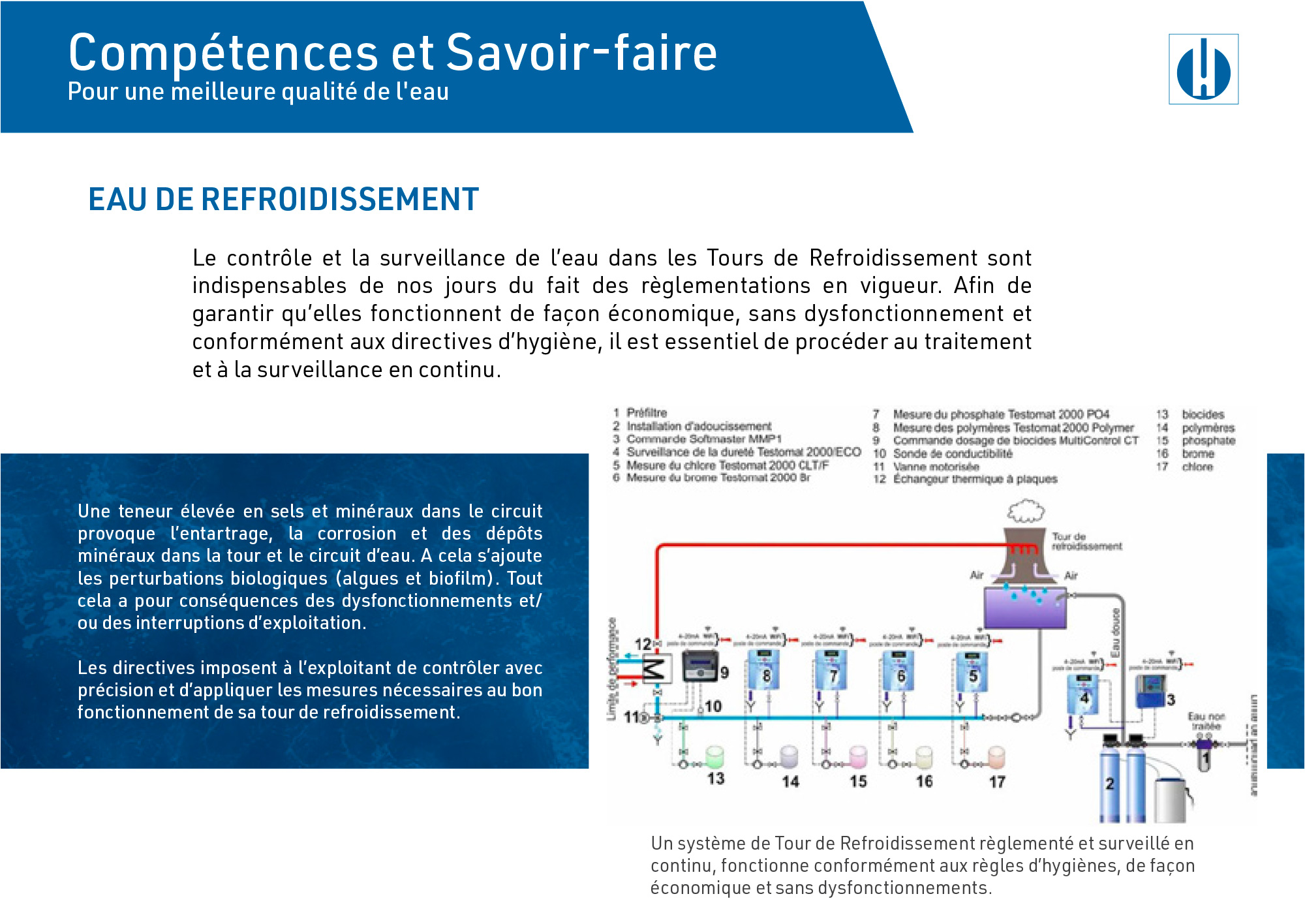
Heyl offers comprehensive systems for monitoring, adjusting and ensuring the safe operation of cooling towers:
MultiControl CT – Automatic purge controlThis system continuously monitors the conductivity of the circulating water and automatically triggers a blowdown as soon as the critical threshold is reached. The result:
- Reduction in mineral deposits
- Stability of salt concentration
- Optimising water and chemical consumption
- Energy savings are the reward
To ensure effective disinfection and comply with health and safety standards, it is essential to monitor the concentration of free chlorine, total chlorine or monochloramine. Heyl’s modular photometers enable:
- Continuous monitoring of the disinfectant concentration
- Automatic transmission of data to the control system
- Precise control of biocide dosing
Compliance with VDI 2047-2 and Legionella risk management
All Heyl solutions are designed to comply with the VDI 2047-2 standard, which sets out the monitoring and hygiene requirements for evaporative cooling systems. By incorporating these technologies, operators can:
- Minimising the risk of Legionella
- Automate corrective actions
- Documenting compliance for audits or inspections
The result: safer, more reliable and more cost-effective installations
With Heyl systems:
- You reduce your operating costs
- You minimise the need for manual intervention
- You avoid breakdowns and regulatory penalties
- You ensure the continuous and safe operation of your cooling towers
For what types of installations?
Heyl technologies are designed for all businesses with open or closed cooling towers:
- Food industry
- Chemicals / Pharmaceuticals
- Data centres
- Commercial buildings and hospitals
- Heavy industry and manufacturing
Investing in online analytics means saving money in the short term
A poorly controlled cooling tower can cost thousands of euros a year in energy and maintenance. By automating monitoring and dosing, you can turn these losses into measurable savings, often with a return on investment of less than 12 months.
Water treatment in hospitals: precision, safety and compliance
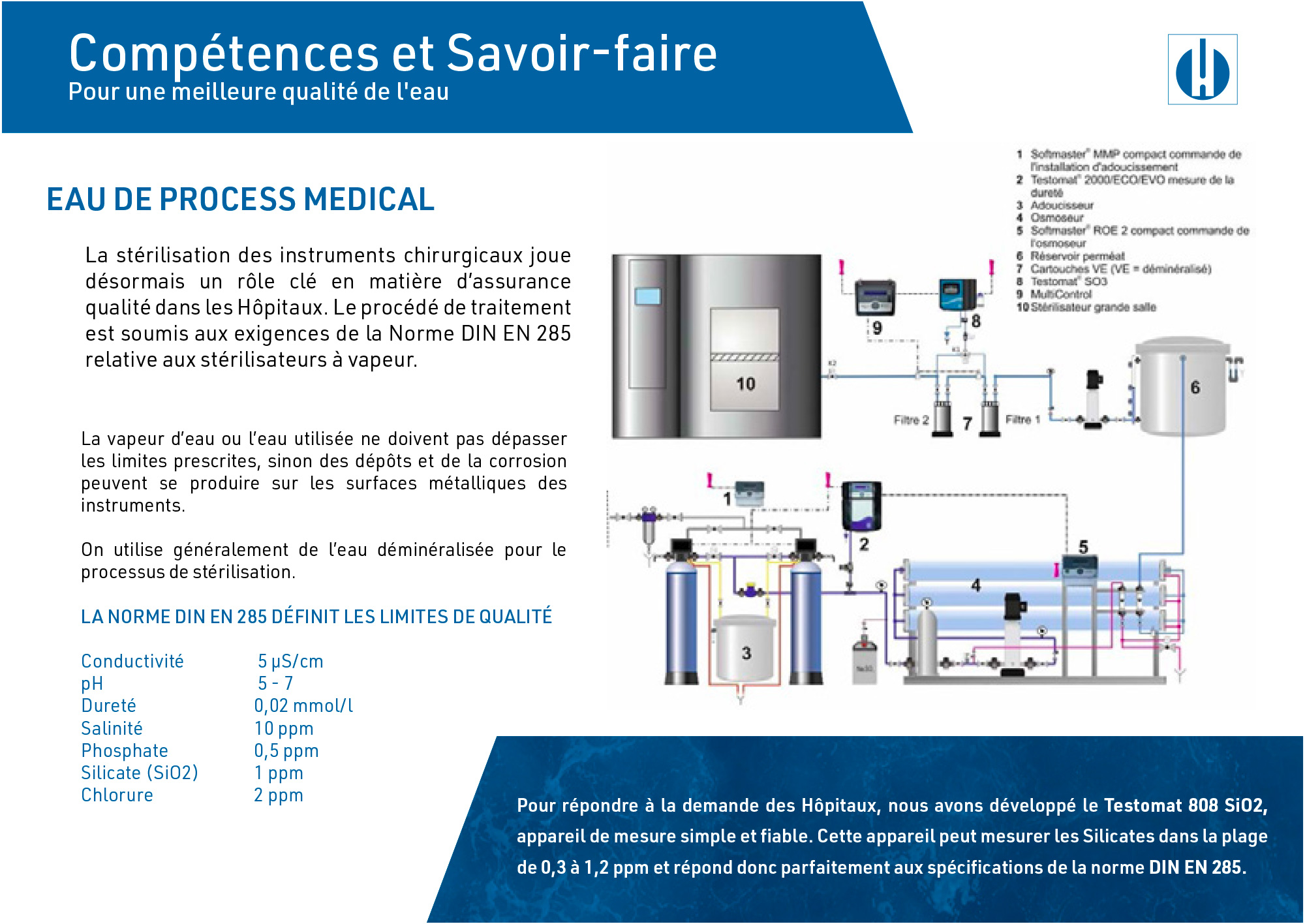
Ensuring flawless demineralised water for reliable sterilisation
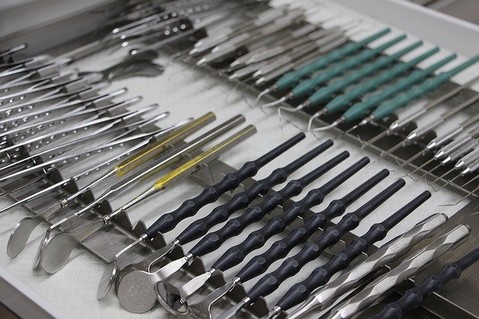
In a hospital setting, the sterilisation of medical instruments relies on ultra-pure water that meets very strict criteria in accordance with the standard DIN EN 285. Indeed, any contamination or deposits on the metal surfaces of the instruments can compromise sterilisation and lead to corrosion or malfunction.
Standard requirements for water or steam used for sterilisation (DIN EN 285):
- Conductivity ≤ 5 µS/cm
- pH between 5 and 7
- Total hardness ≤ 0.02 mmol/l
- Chlorides ≤ 0.1 ppm
- Phosphates ≤ 0.1 ppm
- Silicates (SiO2) ≤ 1 ppm
- Heavy metals (iron, cadmium, lead) at very low levels
A two-tier technical safeguard to ensure quality
Smart monitoring of silicates (SiO2)
The Testomat 808 SiO2, designed to meet the requirements of the standard, automatically monitors silicates within a range of 0.3 to 1.2 ppm. During a peak, for example if a filter becomes saturated following osmosis or ion exchange, the unit can automatically switch to a back-up filter and alert staff via the interface or an alarm signal.
Hospital sterilisation = controlled demineralised water
Hospitals use demineralised water to supply autoclaves. This water must remain free of impurities in order to maintain the performance of sterilisation cycles and extend the service life of the equipment.
| Hospital challenges | Heyl Analysis Solution |
|---|---|
| Demineralised water in accordance with DIN EN 285 | Automatic monitoring of silicates and hardness |
| Deposits or contamination during sterilisation | Switchover to a secondary filter and real-time alerts |
| Unplanned maintenance and associated costs | Proactive monitoring to prevent downtime |
Water treatment in dialysis: safety, purity and therapeutic reliability
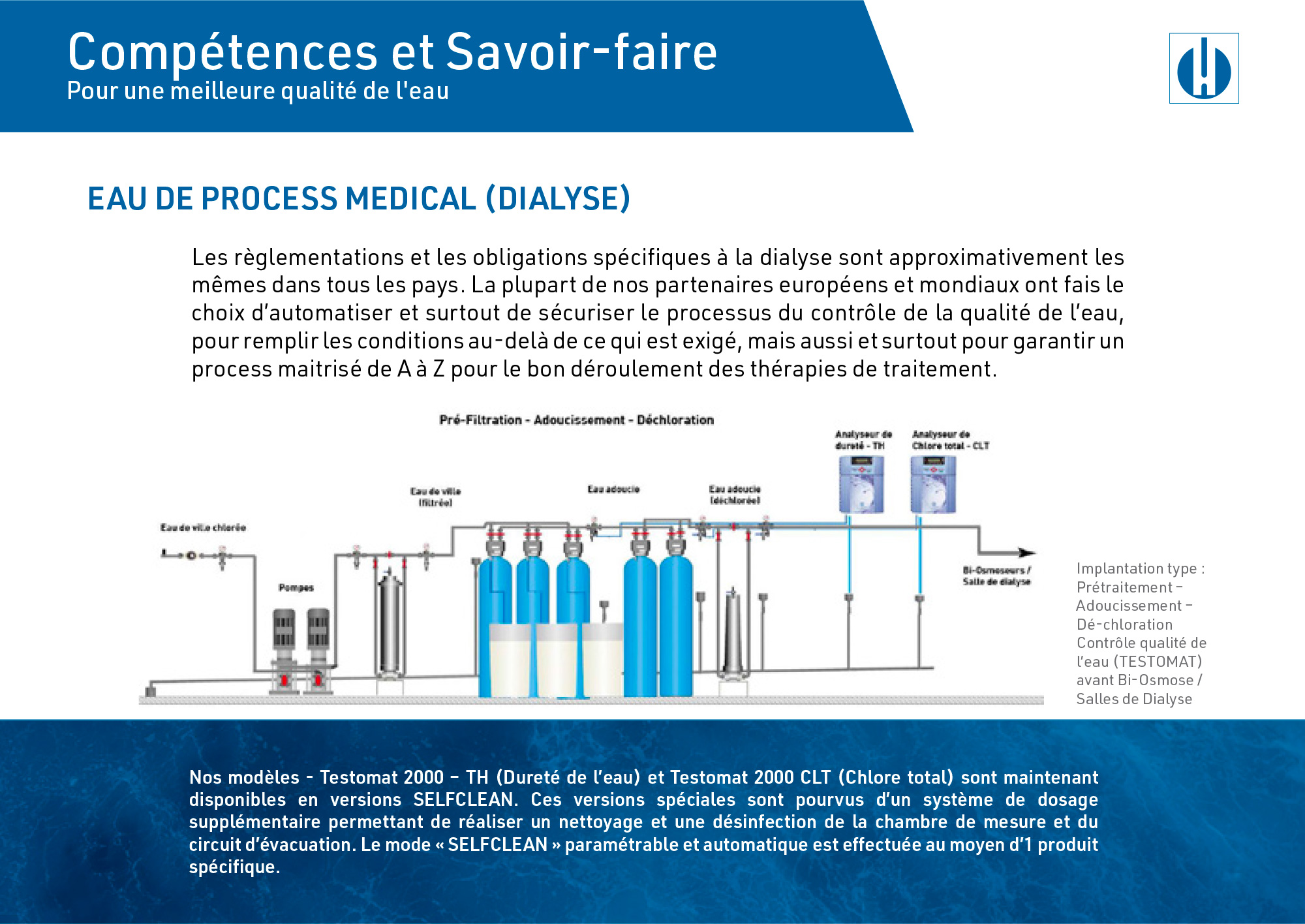
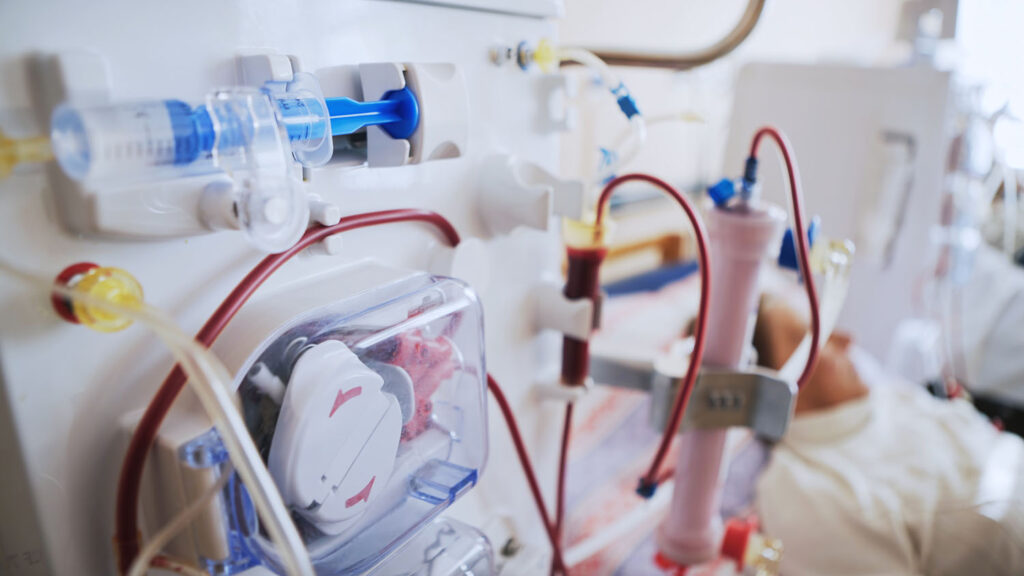
In dialysis, water accounts for approximately 97% of the dialysate, the solution that comes into direct contact with the patient’s blood via a semi-permeable membrane. This water must be free from physico-chemical, microbiological and pyrogenic contaminants, exceeding the requirements for standard drinking water.
Residual hardness (calcium, magnesium) can lead to the formation of deposits and clog sensitive medical devices. Heyl offers:
Testomat 2000 THCL® — a process photometer that measures simultaneously the total hardness and the total chlorine, particularly useful in medical applications such as dialysis.
This system provides continuous monitoring, triggers alerts in the event of a deviation and integrates easily into hospital automation systems thanks to its interfaces (4–20 mA, relays, etc.).
Critical detection of total chlorineChlorine, even in residual form, is highly damaging to membranes and to patients’ health Analysers such as:
- Testomat 2000 THCL®
- Dedicated models Testomat 2000 CLT or CLF, measuring total and/or free chlorine, with a 4–20 mA output and alarm contacts
ensure that any exceedance is immediately detected and reported.
Why these tests are vital in dialysis
- Patient safety: any trace of hardness or chlorine can cause damage to the membranes, leading to infections or immune reactions.
- Therapeutic reliability: ensure safe and uninterrupted dialysis sessions.
- Regulatory monitoring: automatic recordings, sending alert signals or switching over — essential operational reliability in the medical sector.
Summary table
| Challenges in dialysis | Suitable Heyl solution |
|---|---|
| Hardness that can clog the membrane | Testomat 2000 THCL® (hardness and chlorine tester) |
| Chlorine is harmful to patients | Testomat 2000 CLT / CLF (total / free chlorine) |
| Monitoring and automation | Alarms, relays, 4–20 mA integration / PLC |
| Continuity of care | Continuous monitoring, alerts and proactive failover |
Iron removal: smart iron control for water quality
Removing iron: a priority for maintaining facilities
Dissolved iron (Fe2+) in raw water, although invisible to the naked eye, can cause significant damage once it oxidises:
- Blockages in pipes, valves and heat exchangers
- Formation of red deposits (ferric hydroxide)
- Bacterial proliferation (Gallionella, Leptothrix)
- Aesthetic deterioration (discolouration, metallic taste)
Iron removal is therefore an essential step in industrial, agricultural,
municipal and hospital systems. But to ensure it is effective, more than just a filter is needed:
the residual iron concentration must be monitored continuously.
Testomat 2000 Fe
A robust photometric iron analyser, tried and tested in industrial settings.
- Measuring range: 0.02 to 1.0 mg/l Fe2+
- Reliable detection of dissolved iron in raw water or treated water
- 4–20 mA outputs, alarm relays, Modbus interfaces
- Integrates easily into processing systems with over-limit alarms
- Ideal for monitoring the efficiency of the filtration system or checking for clogging of the catalytic filter
Allows you to trigger a automatic rinse or a technical alert as soon as the iron threshold is exceeded.
- The advanced version: more connected, more accurate, more flexible.
- Extended range: 0.02 to 2.0 mg/l, configurable
- Modern interface, on-board diagnostics, easy networking
- Reduced reagent consumption, optimised analysis cycles
- Suitable for sensitive environments: drinking water, pharmaceutical manufacturing, food production
- Compliant with ISO 9001 / HACCP / ACS requirements
It is the ideal tool for critical iron removal systems where precision, traceability and reliability are essential.
In short: effective iron removal + monitoring = a system under control
| Problem | Consequence | HEYL Solution |
|---|---|---|
| Iron dissolved in water | Deposits, corrosion, biofilms | Testomat 2000 Fe – standard monitoring |
| Rapid changes, critical thresholds | Non-compliance with drinking water / industrial water standards | Testomat PRO Fe – advanced monitoring |
| Need for automation | Filter flushing, alarm, monitoring | Integrated 4–20 mA output, relay and Modbus |
Benefits for your customers / facilities
- Rapid detection of deviations (residual iron not properly removed)
- Process safety (no unexpected blockages)
- Traceability of measurements and alarm logging
- Compliance with drinking water or industrial water quality standards
Swimming pool water treatment: balance, safety and sustainability
In swimming pools, water parameters must remain stable to ensure both the comfort of swimmers and the longevity of the facilities. An imbalance, particularly in terms of buffering capacity (alkalinity), can lead to fluctuations in pH, reduce the effectiveness of the disinfectant and cause corrosion of metal surfaces, fibreglass liners or tiles.
The DIN 19643 standard recommends weekly monitoring of the acid capacity: ≥ 0.7 mmol/l for standard swimming pools and ≥ 0.3 mmol/l for hot tubs.
This automatic instrument continuously measures alkalinity and automatically regulates chemical adjustments. It therefore ensures:
- pH stability
- The effectiveness of chlorine or any disinfectant
- Corrosion protection for equipment
- Reducing the use of disinfectants and stabilisers
Active chlorine analysis: the key to disinfection
Chlorine is the main disinfectant used in swimming pools. It must be maintained at optimal levels — generally between 1 and 3 ppm — to ensure the water is free from microorganisms and does not cause eye irritation.
Heyl analysers such as Testomat 2000 CLT (total chlorine) or CLF (free chlorine) continuously monitor these parameters, ensuring precise and consistent disinfection.

| A critical issue | Heyl Analyser | Benefits |
|---|---|---|
| pH fluctuations & corrosion | Testomat ECO C (acid capacity) | Balanced water, equipment protected |
| Disinfectant chlorine level | Testomat 2000 CLT / CLF | Optimal disinfection, enhanced safety |
Water Softening and Reverse Osmosis: pure water, sustainable performance
Ensure water quality with integrated, smart systems
Water softening (ion exchange) and reverse osmosis systems are essential for supplying high-purity water, whether for industrial, sanitary or process applications. Heyl technologies cover the full range of requirements: water softening, reverse osmosis, continuous monitoring and smart system integration.
How do these systems work?
1. Water softening — ion exchange
Heyl water softening systems use an ion-exchange resin, initially saturated with sodium, to remove the calcium and magnesium ions responsible for water hardness. Once saturated, the resin is regenerated using salt (NaCl), releasing the ions captured in the waste water.
2. Reverse osmosis — membrane purification
Reverse osmosis works by forcing water through a semi-permeable membrane under pressure. Undesirable ions (hardness, nitrates, silicic acid, pesticides, etc.) are retained, allowing only almost pure water to pass through (retention of 95 % to 99 %).
Why combine these two technologies?
Effective water softening is essential to protect the reverse osmosis membrane from limescale deposits, which impair its performance. Exceeding the hardness limit can quickly lead to blockages and a drop in efficiency.

Smart control & operational safety
- Heyl systems enable online monitoring of water hardness, with regeneration based on actual consumption, thereby avoiding frequent manual intervention.
- Integration via 4–20 mA interfaces in PLCs ensures smooth control and seamless integration into existing systems.
Operating profit
- Long-lasting protection for the RO membrane
- Reducing the use of chemicals and the risk of human error
- Greater operator safety during regeneration operations
- Consistent performance and energy efficiency